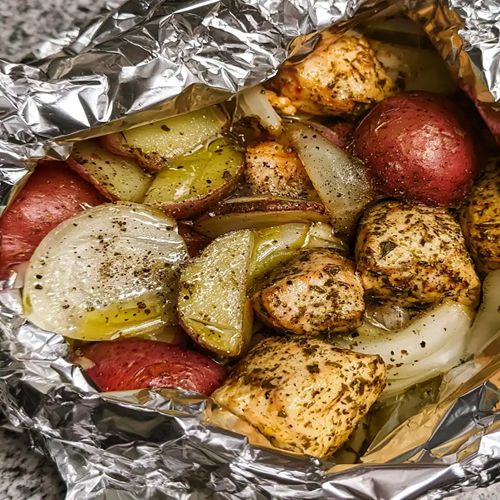
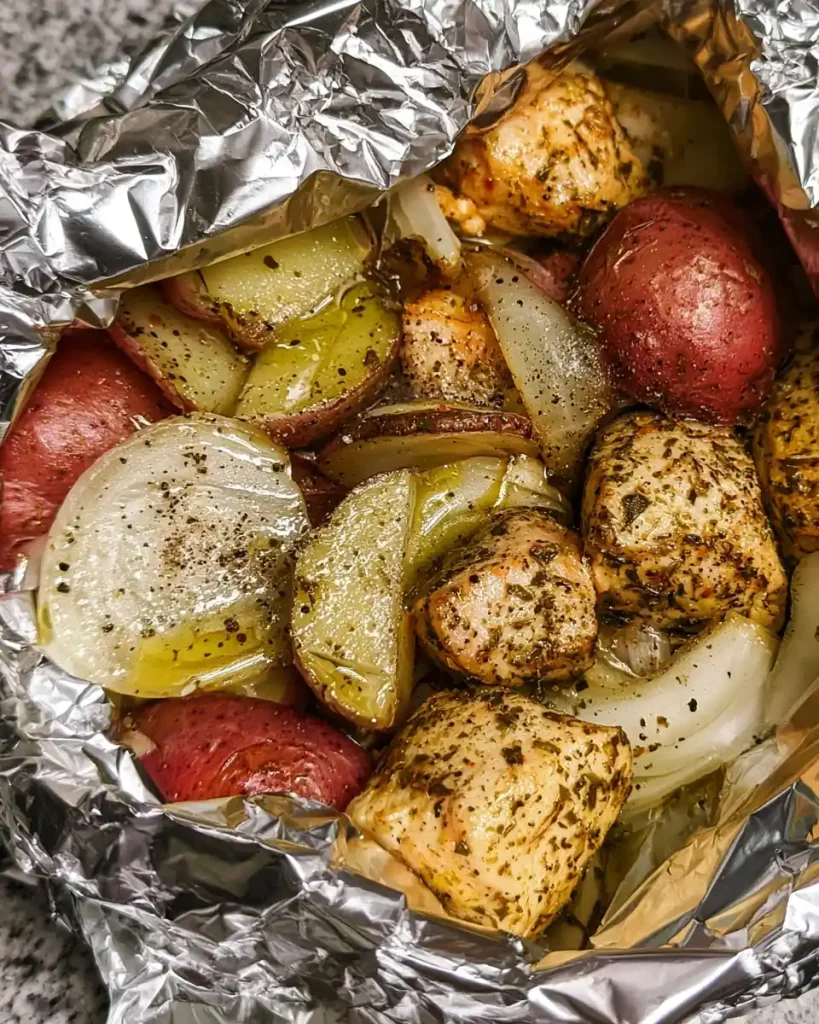
You spend 45 minutes cooking dinner and another 20 minutes washing pots, pans, and whatever that baking dish is still soaking in the sink. What if you skipped all of that? Chicken and Potato Foil Packets in Oven give you a full, hot, flavorful meal and almost nothing to clean up afterward.I started making these on nights when I wanted something real — not cereal, not takeout — but also couldn’t face a pile of dishes. They’ve stayed in my weeknight rotation ever since. Tender chicken, perfectly cooked potatoes, herbs, olive oil, sealed tight. That’s the whole deal.
Why Chicken And Potato Foil Packets In Oven Work on Any Night
The foil does all the work. It traps steam, circulates heat, and keeps every ingredient moist without you having to baste, stir, or check on anything. You prep the packets, slide them in the oven, and walk away.
The chicken and potatoes cook at the same temperature in the same time window, which means nothing dries out while something else finishes. That’s genuinely rare in one-pan cooking, and it’s one of the main reasons this method works so well.
Ingredients for Chicken And Potato Foil Packets In Oven
4 boneless skinless chicken breasts (about 6 oz each)
1 lb red potatoes, sliced into 1/4-inch rounds
1 small yellow onion, thinly sliced
3 tbsp olive oil
2 tsp Italian seasoning, divided
1 tsp garlic powder
1/2 tsp smoked paprika
1 tsp salt
1/2 tsp black pepper
4 sheets heavy-duty aluminum foil (each about 18 inches long)
Cooking spray
How to Make Chicken And Potato Foil Packets In Oven
Step 1: Preheat the Oven to 400°F
Turn your oven to 400°F (200°C) and give it time to fully preheat before the packets go in. A hot oven from the start means the chicken and potatoes begin cooking immediately instead of sitting in a warming environment that gradually climbs to temperature.
While the oven heats, pull out four large sheets of heavy-duty aluminum foil, each about 18 inches long. Lay them flat on the counter side by side. Lightly coat the center of each sheet with cooking spray so nothing sticks to the bottom of the packet during cooking.
Step 2: Season the Chicken
Place your chicken breasts on a cutting board. If any of them are thicker than 1 inch in the center, cover them with plastic wrap and pound them gently with a rolling pin or meat mallet until they’re more even in thickness.
Even thickness means the chicken finishes cooking at the same time across the whole breast. Thick in the middle and thin on the edges means one part overcooks while the other catches up. This step takes 2 minutes and makes a real difference in the final texture.
Season both sides of each chicken breast with 1 tsp Italian seasoning, 1/2 tsp garlic powder, 1/4 tsp smoked paprika, salt, and black pepper. Press the seasoning gently into the surface of the chicken so it adheres rather than just sitting on top.
Step 3: Prep the Potatoes and Onion
Slice your red potatoes into 1/4-inch rounds. Uniform thickness matters here just as much as it does with the chicken. Thick slices won’t finish cooking in the same window as thin ones. If you cut them evenly, they’ll all be tender at the 30-minute mark without any guesswork.
Slice the onion thin — about 1/8 inch. Thin onion slices soften and sweeten completely during baking, becoming almost jammy and delicious. Thick chunks stay firm and sharp, which nobody wants in this particular dish.
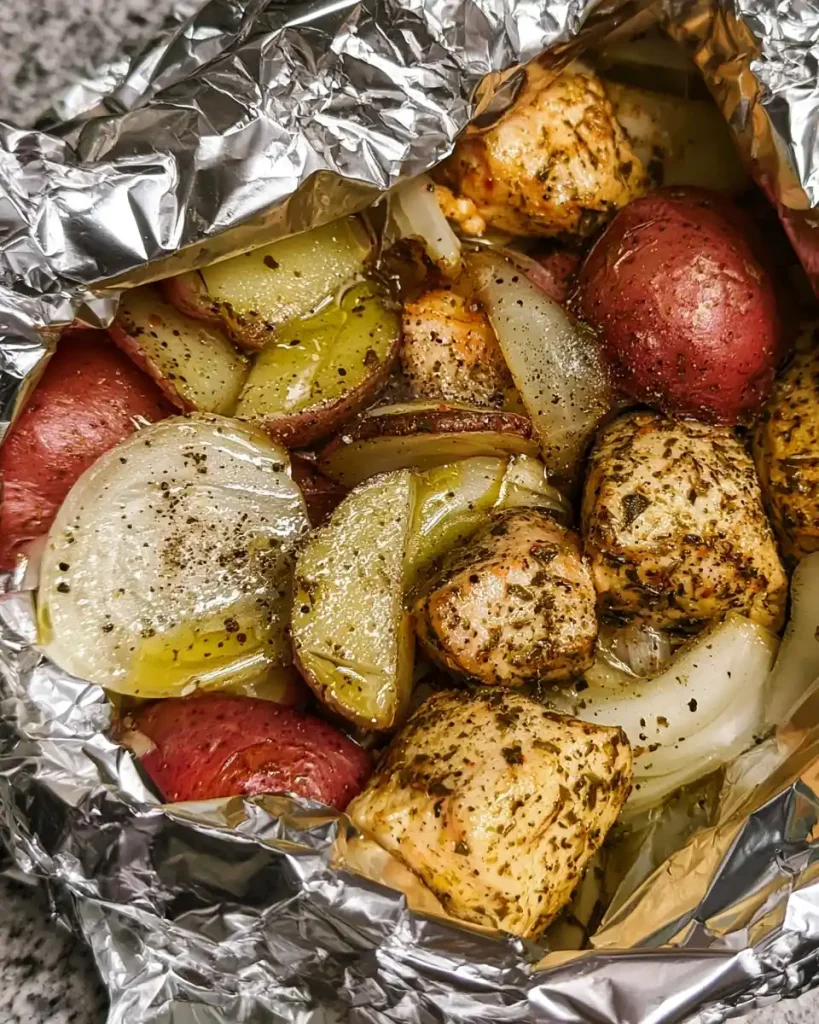
In a medium bowl, toss the potato slices and onion together with 2 tbsp olive oil, 1 tsp Italian seasoning, a pinch of salt, and a few cracks of black pepper. Toss until every slice has a light coating of oil and seasoning. This step ensures the vegetables cook evenly and develop flavor on their own, not just from the chicken drippings.
Step 4: Assemble the Foil Packets
Place one seasoned chicken breast in the center of each prepared foil sheet. Arrange the potato and onion mixture around and slightly over each chicken breast. Distribute the vegetables evenly across all four packets.
Drizzle the remaining 1 tbsp of olive oil evenly across the four packets — about 3/4 teaspoon per packet. This extra drizzle keeps everything from drying out, especially the potatoes on top that sit closer to the foil and get more direct heat.
Now fold the packets. Bring the two long sides of foil up over the filling and fold them together tightly, rolling the fold down toward the food. Then fold in both short ends, rolling them upward to seal. You want tight seals on all sides so steam builds up inside the packet and cooks everything through.
FYI, a loose seal is the main reason foil packet meals disappoint people. The steam escapes, the food dries out, and you wonder why this method everyone raves about didn’t work for you. Seal them tight.
Step 5: Arrange on a Baking Sheet and Bake
Place all four sealed foil packets on a large rimmed baking sheet. The baking sheet does two things: it gives the packets a flat, stable surface to sit on, and it catches any liquid that might escape from a less-than-perfect seal.
Slide the baking sheet into the center rack of your preheated oven. Bake for 25 to 30 minutes. Thicker chicken breasts or larger potato slices may need the full 30 minutes. Thinner cuts at 25 minutes should be done.
At the 25-minute mark, carefully open one packet — the steam will be intensely hot, so open the far end away from you first — and check the chicken. The internal temperature should read 165°F on an instant-read thermometer. The potatoes should feel completely tender when you pierce one with a fork. If either needs more time, reseal and return to the oven for 5 more minutes.
Step 6: Open Carefully and Season to Taste
When the packets come out of the oven, let them rest on the baking sheet for 3 to 5 minutes before opening. The steam inside is under pressure and will release forcefully the second you cut into the foil. Those few minutes let some of that pressure dissipate.
Open each packet by cutting a slit across the top with kitchen scissors, then folding back the foil carefully. Taste the chicken and vegetables and add any additional salt, pepper, or a squeeze of fresh lemon juice if you want a bright finish. The lemon isn’t necessary, but it sharpens all the flavors noticeably.
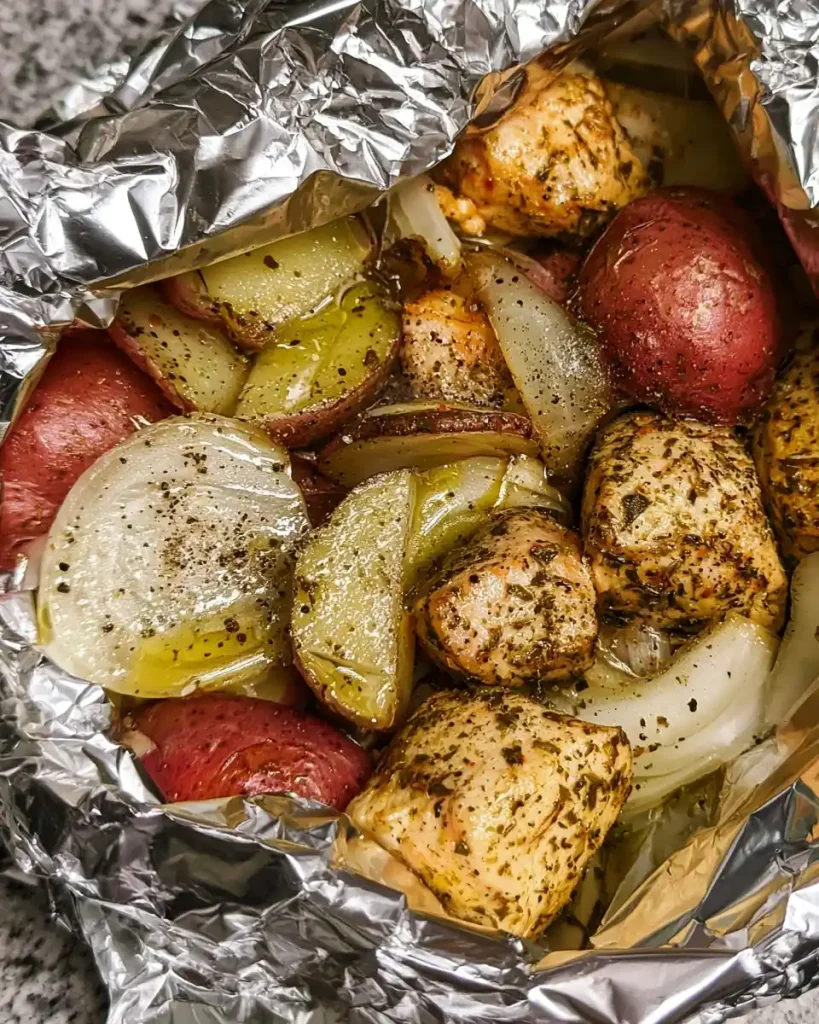
Serve the Chicken and Potato Foil Packets directly in the foil for a casual weeknight meal, or slide everything onto a plate for a cleaner presentation.
Tips for Getting the Best Results
Cut potatoes to a consistent 1/4-inch thickness. Uneven slices mean some finish early and turn mushy while others stay firm.
Use heavy-duty foil, not regular foil. Regular foil tears more easily and doesn’t hold the seal as well under oven heat.
Don’t overcrowd the packets. Each packet should hold one chicken breast and a reasonable amount of vegetables. Overloading extends cook time and leads to uneven results.
Always check internal temperature. Visual cues for chicken doneness aren’t reliable. A thermometer reading of 165°F is the only way to know for sure.
Add fresh herbs after cooking, not before. Fresh parsley, basil, or dill added right before serving gives a brighter flavor than herbs that baked for 30 minutes.
Variations Worth Trying
Have you ever made the same recipe twice and wondered how different it could be with one swap? These Chicken and Potato Foil Packets are surprisingly flexible:
Replace chicken breasts with boneless chicken thighs for a richer, juicier result. Thighs are more forgiving if you accidentally go a few minutes over on cook time.
Add 1/2 cup sliced bell peppers or zucchini to the vegetable mix for extra color and a slightly different flavor profile.
Swap Italian seasoning for Cajun seasoning and smoked paprika for a completely different flavor direction that works just as well with the same base.
Use baby potatoes halved instead of sliced red potatoes for a heartier, chunkier texture. They’ll need the full 30 minutes.
Add 2 tbsp of cream cheese to each packet before sealing for a creamy sauce that forms from the steam. IMO, this variation is underrated and worth trying at least once.
Serving Suggestions
These foil packets are a complete meal on their own, but a few additions round things out nicely:
Serve with warm crusty bread to soak up the seasoned juices that collect in the bottom of the packet.
A simple green salad with lemon vinaigrette balances the richness of the chicken and potatoes.
Steamed green beans or broccoli on the side adds color to the plate without much extra effort.
Equipment You Need
4 sheets heavy-duty aluminum foil (18 inches each)
Large rimmed baking sheet
Medium mixing bowl
Sharp knife and cutting board
Instant-read meat thermometer
Kitchen scissors for opening packets
FAQs About Chicken And Potato Foil Packets In Oven
Can I assemble the packets ahead of time? Yes. Assemble them fully, seal tightly, and refrigerate for up to 24 hours before baking. Pull them from the fridge 15 minutes before they go in the oven so they’re not ice cold when they start cooking. Cold packets take longer to come up to temperature.
Can I use frozen chicken? Fresh or fully thawed chicken gives the best results. Frozen chicken releases a lot of water as it cooks, which can make the potatoes soggy and dilute the seasoning. If you must use frozen, thaw it completely first.
How do I know when the potatoes are done? Open one packet carefully and pierce a potato slice with a fork. If the fork slides in with no resistance, they’re done. If it meets any firmness, seal the packet back up and give it 5 more minutes.
Can I make this on a grill instead of the oven? Absolutely. Preheat the grill to medium-high heat (around 400°F) and place the sealed packets directly on the grates. Cook for the same 25 to 30 minutes. The grill adds a very slight smoky undertone that works well with the Italian seasoning.
Why did my packets leak? Usually the folds weren’t tight enough, or the foil got a small tear. Use heavy-duty foil and make double folds on all seams. The baking sheet underneath catches any leaks so nothing makes a mess of your oven. :/
Can I add cheese to the packets? Yes, and it’s a great addition. Add shredded mozzarella or parmesan on top of the chicken in the last 5 minutes of baking — open the packet, add cheese, reseal loosely, and return to the oven. Fully melted, slightly browned cheese on top of the chicken is a serious upgrade.
Final Thoughts on Chicken And Potato Foil Packets In Oven
Chicken and Potato Foil Packets in Oven solve the actual problem with weeknight cooking: the time and the cleanup. Season your ingredients, assemble your packets, bake for 30 minutes, and you’re done. No pans, no stirring, no hovering.
The recipe is forgiving, customizable, and consistently delivers a hot, satisfying meal that tastes like you put in far more effort than you did. Make it once this week and see how quickly it lands on your regular rotation.
Credit: kitchenlyhub