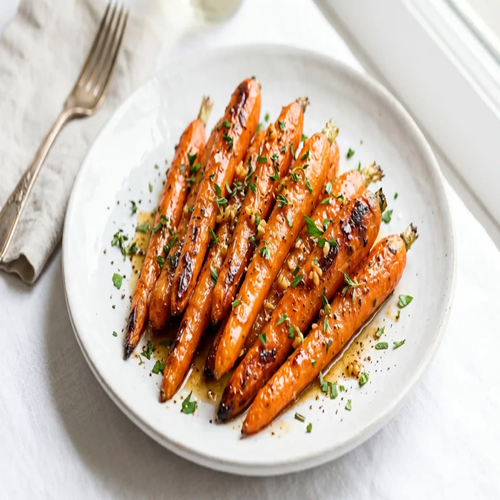
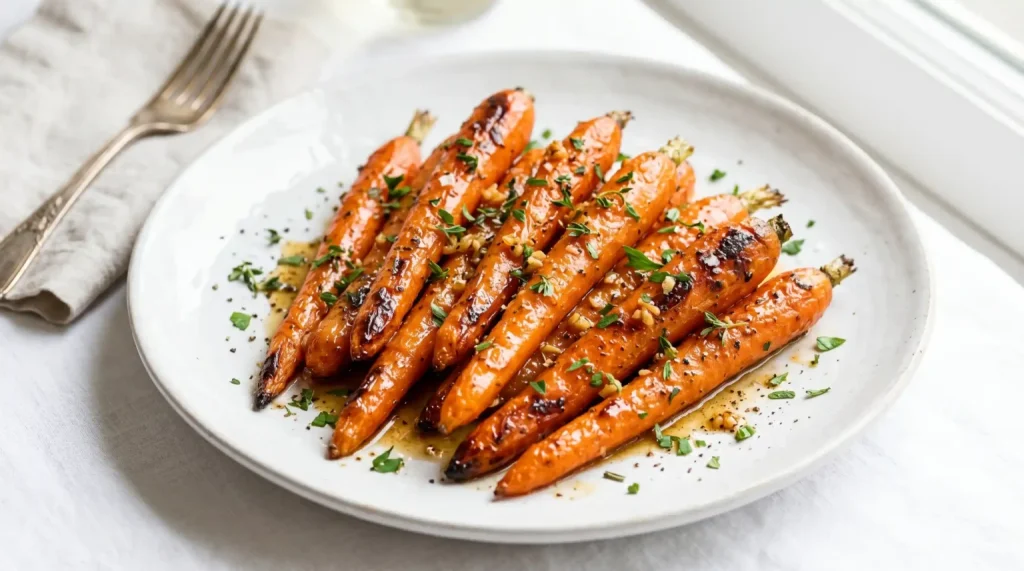
Carrots tend to show up at the dinner table as the afterthought vegetable. You know the ones — steamed, vaguely orange, tasting of very little and looking equally uninspired. Roasted Brown Butter Honey Garlic Carrots are the complete opposite of that experience. High-heat roasting caramelises the natural sugars in the carrot until they are sweet and concentrated, then a warm glaze of nutty browned butter, honey, and garlic goes over the top and makes a simple vegetable taste genuinely extraordinary.
I made these for a dinner where carrots were genuinely the most-discussed element of the meal — which, for a table that also included a slow-roasted lamb and three other sides, represents a significant achievement for a root vegetable. The brown butter is the secret. It adds a depth of flavour that regular melted butter cannot get close to, and combined with the honey and the caramelised roasted carrot, it produces a result that tastes completely intentional rather than incidental.Have you ever made a vegetable side that generated genuine enthusiasm at the table? This is that dish, and it takes less than an hour. Let us make it the right way.
Why Brown Butter Is the Ingredient That Makes This Recipe Work
Regular melted butter adds richness and fat to food. Brown butter adds richness, fat, and approximately forty new flavour compounds that develop when the milk solids in butter caramelise during heating. The process produces a warm, nutty, almost toffee-like flavour that tastes nothing like plain melted butter and transforms every dish it touches into something that tastes noticeably more complex.Combined with honey and garlic, brown butter creates a glaze that hits every flavour note simultaneously — sweet from the honey, savoury from the garlic, deeply nutty from the butter’s caramelisation, and slightly sharp from the garlic’s own natural compounds. This combination spoons over roasted carrots that have already developed their own caramelised sweetness from the oven, producing a layered flavour that tastes like something requiring far more effort than it actually does.
The technique is simple once you understand the visual cue. Butter goes into a light-coloured pan over medium heat. As the water evaporates and the milk solids begin to brown, the butter turns golden, then amber, and releases a deeply nutty aroma. That amber stage is where you pull it — one minute past amber and it burns. FYI — a light-coloured or stainless pan makes it significantly easier to see the colour change than a dark non-stick.
What You Need-Roasted Brown Butter Honey Garlic Carrots
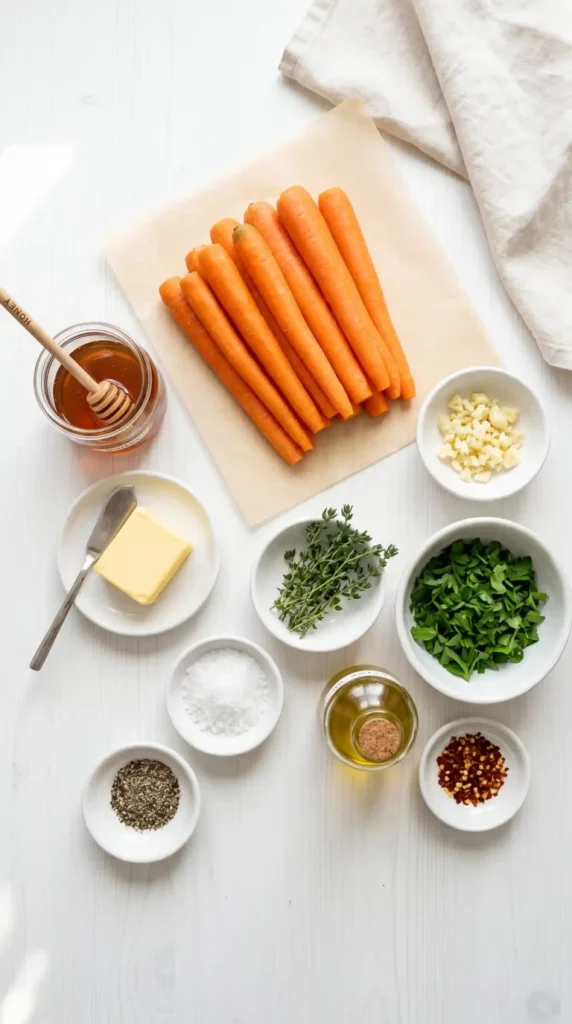
For the Roasted Carrots
900g (about 2 lbs) whole carrots, peeled — medium-sized and as uniform in thickness as possible for even cooking
2 tablespoons olive oil
1/2 teaspoon salt
1/4 teaspoon black pepper
For the Brown Butter Honey Garlic Glaze
4 tablespoons (57g) unsalted butter — unsalted gives you control over the final seasoning
3 tablespoons pure honey — a good quality honey here makes a noticeable difference; darker, more robust varieties produce deeper flavour
4 garlic cloves, very finely minced or pressed
1 teaspoon fresh thyme leaves (or 1/2 teaspoon dried thyme)
1/4 teaspoon salt
Pinch of red pepper flakes (optional — adds a subtle background warmth that contrasts beautifully with the honey)
Now For Finishing
Fresh thyme sprigs for garnishing
Flaky sea salt, a light pinch scattered over the finished dish
Fresh flat-leaf parsley, roughly chopped (optional — adds a bright green colour contrast)
Choose Uniform Carrots — Uneven Sizes Cook Unevenly and That Matters Here Roasting requires every piece on the pan to finish cooking at roughly the same time. If you have thin baby carrots mixed with thick whole ones, the thin carrots burn before the thick ones caramelise properly. Select carrots as close to the same diameter as possible. If your carrots vary in thickness, halve the larger ones lengthwise so the cut surface can caramelise directly against the pan. The cut surface in contact with the hot pan produces the most intense caramelisation and sweetness.
How to Make Roasted Brown Butter Honey Garlic Carrots Step by Step
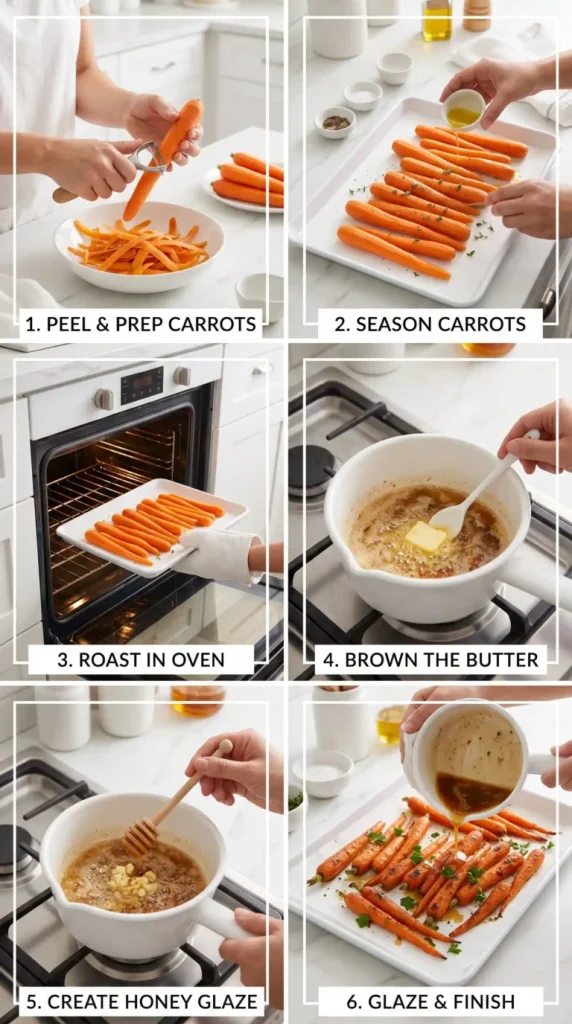
Two stages: roast the carrots until caramelised and tender, then make the brown butter glaze and spoon it over. The roasting runs unattended for most of the 30–35 minutes. The glaze comes together in about 4 minutes on the stovetop while the carrots finish in the oven. Everything happens in a controlled sequence that produces a consistently excellent result without requiring constant attention. Let us walk through each stage properly.
Step 1: Preheat the Oven and Prepare the Carrots
Preheat your oven to 220°C (425°F). High heat is essential — it produces the caramelisation and slight charring at the edges that makes roasted carrots taste significantly more complex than steamed or even lower-temperature roasted ones. A cool oven produces pale, soft carrots that steam in their own moisture rather than roasting to golden, concentrated sweetness. Give the oven a full 20 minutes to reach the correct temperature before the carrots go in.
Peel the carrots and trim the tops, leaving about 2cm of green stem attached if the carrot tops are fresh and bright — the stem adds a visual elegance to the finished dish that requires zero extra effort. If the carrot tops look wilted or brown, trim them flush with the carrot shoulder. Halve any particularly thick carrots lengthwise — you want the widest diameter of any carrot on the pan to be no more than about 2.5cm for even roasting throughout.
Step 2: Season and Roast the Carrots
Spread the prepared carrots in a single layer on a large rimmed baking sheet. Do not crowd them — every carrot needs space around it for hot air to circulate and caramelise the surface rather than creating steam that keeps the carrots pale and soft. If your baking sheet is not large enough to hold all the carrots in a single layer with space between them, use two sheets on adjacent racks and swap their positions halfway through roasting.
Drizzle the olive oil over the carrots and roll each one briefly to coat all sides. Sprinkle the salt and black pepper evenly over the oiled carrots. Place the baking sheet on the centre rack of the preheated oven and roast for 25 minutes without disturbing them. Resist the urge to open the oven and check during the first 20 minutes — each oven opening drops the temperature by 15–20°C and extends the cooking time while also interrupting the caramelisation process.
After 25 minutes, remove the pan from the oven and use tongs to turn each carrot over. The underside should look deeply golden to amber-brown with caramelised edges. If it looks pale, the oven was not fully preheated or the pan was too crowded. Return the pan to the oven for another 5–10 minutes until the carrots look golden all over, tender when pierced with a sharp knife at the thickest point, and caramelised along both the top and the edges. The total roasting time is 30–35 minutes.
Step 3: Make the Brown Butter Honey Garlic Glaze
While the carrots finish their final 5–10 minutes in the oven, make the glaze. Use a small, light-coloured saucepan — stainless steel, enamel, or copper — so you can see the colour change as the butter browns. Place the butter in the pan over medium heat. The butter will melt, then begin to foam. Stir occasionally with a heat-resistant spatula as it heats.
After the foam subsides — about 2–3 minutes from when it started — watch the pan carefully. The milk solids at the bottom of the pan will begin to turn golden, then amber. The butter will smell intensely nutty and toasty. The moment the butter reaches a medium amber colour, remove the pan from the heat immediately. Browned butter goes from perfectly amber to burnt in under 30 seconds. Pull early rather than late — slightly under-browned butter still tastes excellent, while burnt butter is unusably acrid.
Working quickly with the pan off the heat, add the minced garlic to the hot brown butter. The residual heat will cook the garlic gently — stir it through the butter for about 30 seconds as it sizzles in the hot fat. Add the honey, thyme, salt, and red pepper flakes if using. Stir everything together until the honey dissolves into the warm butter and the glaze looks smooth and cohesive. The glaze will be pourable but thick — similar to a warm caramel sauce in consistency.
Step 4: Glaze and Serve
Remove the finished carrots from the oven and arrange them on a warm serving platter. Spoon the brown butter honey garlic glaze slowly and evenly over the hot carrots — pour from the centre outward, allowing the glaze to coat every exposed surface as it flows down the sides. The carrots are hot enough that the glaze will immediately sizzle against the surface and create an audible, satisfying sound that signals the glazing is working correctly.
Scatter fresh thyme sprigs, a very light pinch of flaky sea salt, and chopped fresh parsley across the finished Roasted Brown Butter Honey Garlic Carrots. Serve immediately — the glaze is at its most fluid and most beautifully coating when the carrots are hot. As they cool, the honey and butter in the glaze thicken and become less evenly distributed. Serve hot and let the platter speak for itself.
Why You Add the Garlic After the Butter Browns — Not DuringGarlic added to butter before browning burns before the butter reaches the right colour. Garlic burns at a lower temperature than butter’s browning point, producing a bitter, acrid flavour that taints the entire glaze. Adding minced garlic to the pan after you pull it from the heat — when the butter is amber but the pan is no longer on direct flame — cooks the garlic gently in the residual heat without burning it, producing a sweet, mellow garlic note rather than a sharp or bitter one.
Variations Worth Making
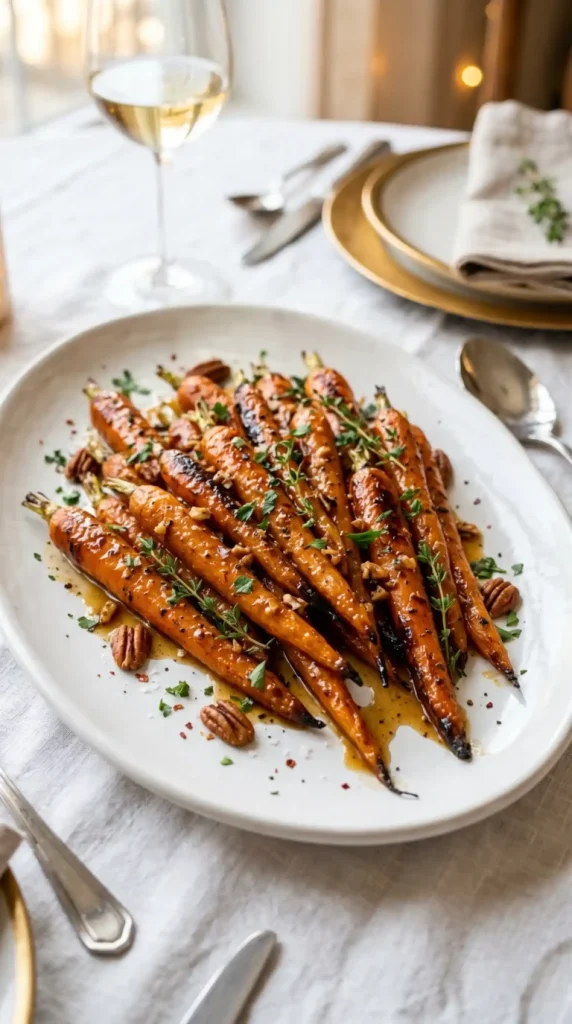
Maple Pecan Brown Butter Carrots
Replace the honey with pure maple syrup and add 1/4 cup of roughly chopped toasted pecans to the glaze just before spooning it over the carrots. The maple syrup produces a more complex, slightly smoky sweetness compared to honey, and the toasted pecans add a crunchy textural contrast to the tender roasted carrot. This version suits autumn and winter menus particularly well and pairs beautifully with roasted turkey or pork.
Cumin and Coriander Spiced Carrots
Add 1/2 teaspoon of ground cumin and 1/4 teaspoon of ground coriander to the olive oil toss before roasting. Replace the thyme in the glaze with fresh cilantro leaves scattered over after serving. Finish with a squeeze of fresh lime juice over the glazed carrots. The warm spices transform the dish from a classic European-inspired side into a Middle Eastern-adjacent preparation that pairs wonderfully with lamb, hummus, and grain-based dishes.
Balsamic Glazed Brown Butter Carrots
Add 1 tablespoon of good quality balsamic vinegar to the brown butter glaze alongside the honey, reducing the honey by a tablespoon to balance the acidity. The balsamic adds a tangy, wine-like note that cuts through the richness of the brown butter more assertively than the thyme alone. This version tastes more sophisticated and dinner-party appropriate and pairs particularly well with beef and lamb-based main courses.
What to Serve With Brown Butter Honey Garlic Carrots
These carrots function as a standalone impressive side or as part of a larger spread. They pair especially well with roasted chicken — the honey and garlic in the glaze echo the classic roast chicken seasoning profile and the two dishes feel like they belong on the same table without either competing for the same flavour territory. Serve alongside mashed potatoes or a grain pilaf for a complete meal.
They also work beautifully at holiday tables alongside roasted lamb, beef tenderloin, or glazed ham. The sweet-savoury glaze complements all three proteins and the visual impact of the whole glazed carrots on a platter adds colour and elegance to any spread. IMO, these carrots deserve to appear at every Thanksgiving and Christmas table where carrots have previously been an afterthought, and the first time they do, nobody will treat them as an afterthought again.
Storage and Reheating Tips
Store leftover Roasted Brown Butter Honey Garlic Carrots in an airtight container in the refrigerator for up to 4 days. The glaze firms as the carrots cool and the butter solidifies — this is normal and expected. Reheat in a hot oven at 200°C for 8–10 minutes until the carrots warm through and the glaze re-liquefies and coats the surface again. A microwave works in a quick pinch but produces uneven heating and the glaze can separate slightly.
These carrots are excellent cold as a salad element the next day — slice them into rounds, toss with fresh rocket, toasted walnuts, and a light balsamic dressing, and the glazed carrot becomes the star ingredient of a genuinely impressive salad. The cold glaze clings to each slice and the sweet-savoury flavour holds up beautifully at room temperature in a way that most roasted vegetables do not.
Frequently Asked Questions
Can I use baby carrots instead of whole carrots?
Yes. Baby carrots roast well at the same temperature and with the same technique — reduce the roasting time by about 8–10 minutes since baby carrots are smaller and cook through more quickly. Spread them in a single layer, ensure they have space between each one, and check for doneness at the 20-minute mark. Baby carrots do not produce as dramatic a caramelised surface as full-sized carrots because they have less surface area exposed to the direct pan heat, but they taste excellent and work well for casual weeknight cooking.
Can I make the brown butter glaze ahead of time?
Yes. Brown butter stores well in the refrigerator for up to 2 weeks in a sealed jar. The honey and garlic glaze specifically can be made up to 24 hours ahead — store it covered in the fridge and reheat gently in a small saucepan over low heat before spooning over the carrots. Stir while reheating to ensure the honey and butter reintegrate smoothly. Do not microwave the glaze — it can cause the honey to crystallise unevenly and separate from the butter.
How do I know when the brown butter is ready?
Watch for three simultaneous signals: the butter should look medium amber in colour (past golden, not yet dark brown); it should smell deeply nutty and toasty rather than just buttery; and the foam on the surface should have mostly subsided, revealing the colour of the liquid below. Use a light-coloured pan so you can see the colour clearly — a dark non-stick makes it almost impossible to judge the colour accurately. When all three signals appear simultaneously, remove the pan from the heat immediately. The timing takes practice but becomes intuitive after two or three attempts.
Can I roast the carrots on the same pan as other vegetables?
Yes, with one important consideration: only add vegetables that cook at the same rate as the carrots. Potatoes and beets work well alongside carrots because they need similar roasting times. Zucchini, green beans, and asparagus cook much faster and will burn before the carrots finish — add these in the final 10–15 minutes only. Whatever vegetables you add, ensure the pan is large enough to keep everything in a single layer without crowding, which is the single most important condition for successful high-heat roasting.
Can I make this recipe dairy-free?
Yes. Replace the butter with a good quality vegan butter for the glaze — several brands produce vegan butter that browns similarly to dairy butter, though the timing and colour cues may differ slightly since the milk solid content varies. Alternatively, use extra virgin olive oil warmed with the garlic and honey for a simpler, lighter glaze that still tastes excellent. The nutty depth of true brown butter cannot be fully replicated without dairy fat, but the honey-garlic combination still produces a genuinely delicious result on its own.
Final Thoughts
These Roasted Brown Butter Honey Garlic Carrots earn their place as the most reliably impressive side dish in any cook’s repertoire. The technique is accessible, the ingredients are ordinary, and the result is extraordinary — deeply caramelised carrots in a warm, nutty, sweet-savoury glaze that makes people stop mid-conversation to comment on a vegetable side dish. That kind of impact from that level of effort is genuinely rare.
Serve them on busy weeknights when you want something impressive without spending hours in the kitchen. They also belong on holiday tables, where a well-made vegetable side can stand confidently beside more elaborate dishes. Most importantly, bring them to gatherings where you want to remind people that vegetables deserve just as much care and attention as the main protein — because this recipe proves exactly that.
Preheat that oven fully. Give the carrots space on the pan. Watch that butter the whole time. And spoon that glaze over while everything is hot enough to sizzle. The result will make a carrot enthusiast out of anyone who claimed not to like carrots — and that, frankly, is the best possible outcome from 45 minutes and a root vegetable.